
The Existential Challenge of Knowledge Worker
How a decade of building a tech & law companies led me to a personal challenge of self-automation (Part 2)

YC founder’s question which cost me sleepless nights
Midway through my 10-years legal and tech career (which I touched on in my previous post), I realized what it truly means to be a "knowledge worker." I observed how accumulating industry and legal knowledge was advancing my career as a legal practitioner and tech entrepreneur.
However, during a meeting with one YC founder in 2020, I heard a provocative question: "Nestor, it's great to see how your legal and industry knowledge is evolving, but how do you plan to scale it?"
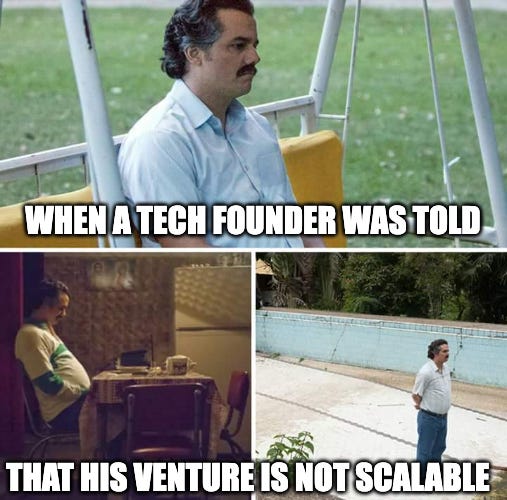
Being obsessed with scalable solutions—likely a result of my tech entrepreneurship background—this question resonated deeply with me and kept me awake for several nights.
This question struck me deeply at the time, but the pandemic and the full-scale war in Ukraine in the following years shifted my focus to mere survival.
The question from my fellow founder resurfaced in late 2023 when I received a recap from Fireflies AI analyzing over 1,500 meetings and nearly 100,000 minutes of work conversations that year. The statistics were shocking.
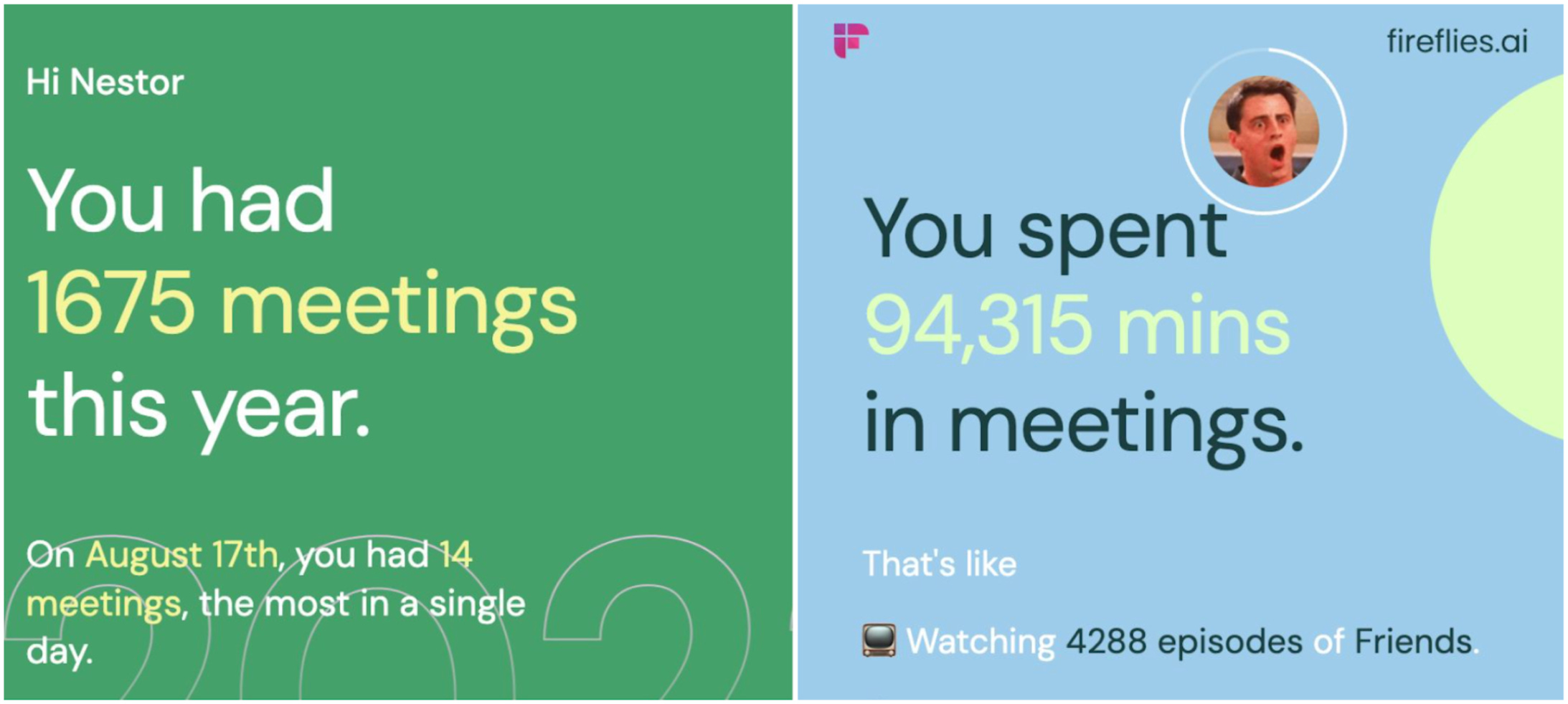
In 2023, my workday resembled a call center—leaving almost no time for thinking and self-reflection
After seeing these shocking statistics, I asked myself an existential question for the first time: did I want to spend my next 20-25 years of active professional life this way?
Or was there another path?
It began with innocent note-taking..
Ten years ago, as a law school student, I began personal note-taking. I collected interesting idioms from fiction books to impress friends in conversations (an embarrassing habit, I know 🤦♂️)
A couple of years later, I expanded my note-taking to personal projects. One of my first projects was building a family tree—I interviewed over 20 relatives to map our family connections and even reconnected with distant relatives whose ties were lost during WWII.
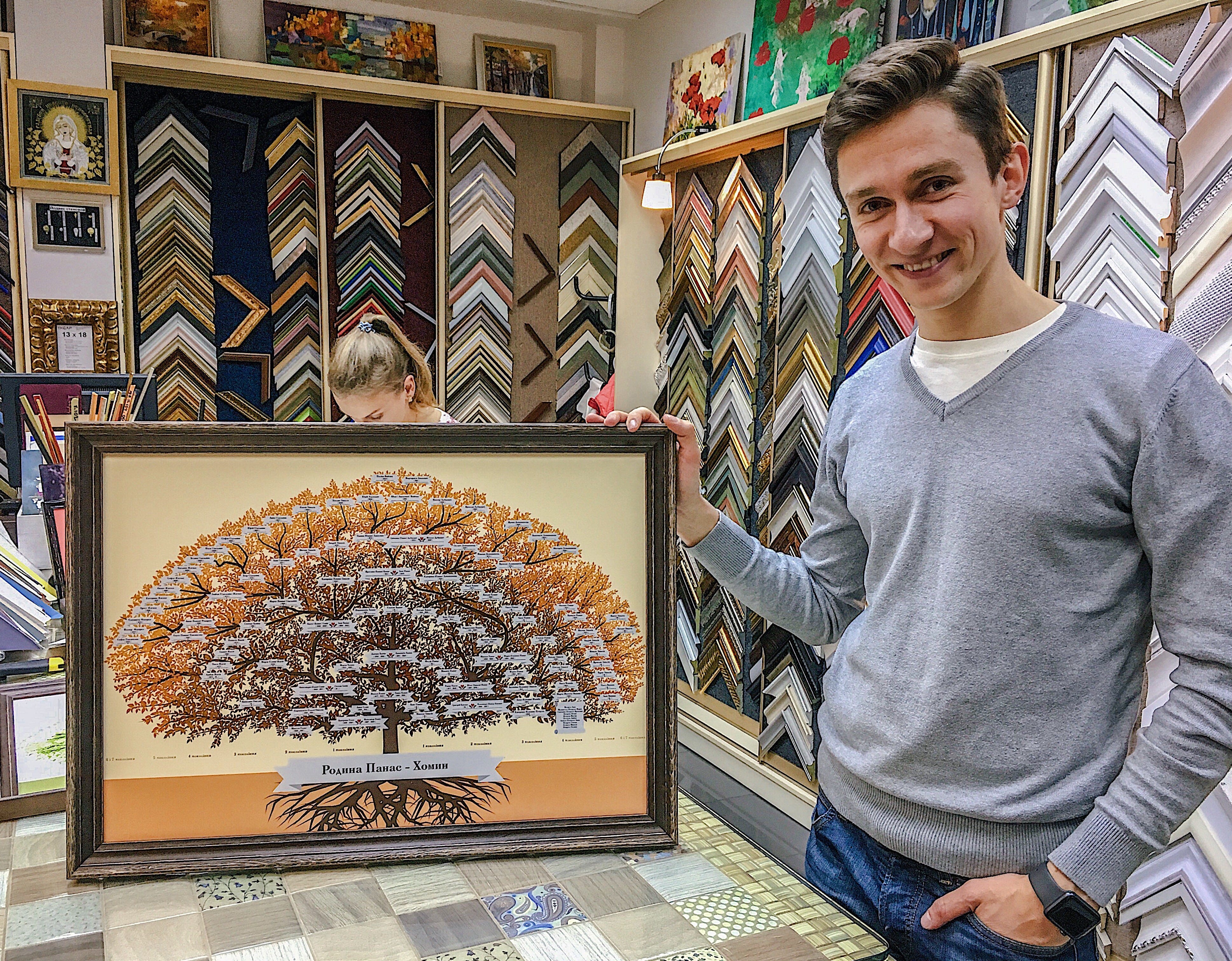
My family tree project became my first meaningful application of note-taking techniques, allowing me to trace my ancestors back to the early 1800s
Back to that time my personal database of notes was growing rapidly, and I felt proud of my work—until I realized there was no correlation between the size of my note collection and my personal productivity.
That was the moment I first faced the challenge of processing unstructured information.
Painful Lesson Learned
In 2022, my personal note collection had grown so large that I struggled to find anything in it. I began forgetting what information I had already added, leading to duplicate notes. Projects and tasks I tried to track became a complete mess. And my ideas folder? It transformed into a graveyard of unrealized dreams and thoughts.
During this time, I started losing interest in personal note-taking until I encountered this phrase: "Information is not knowledge"
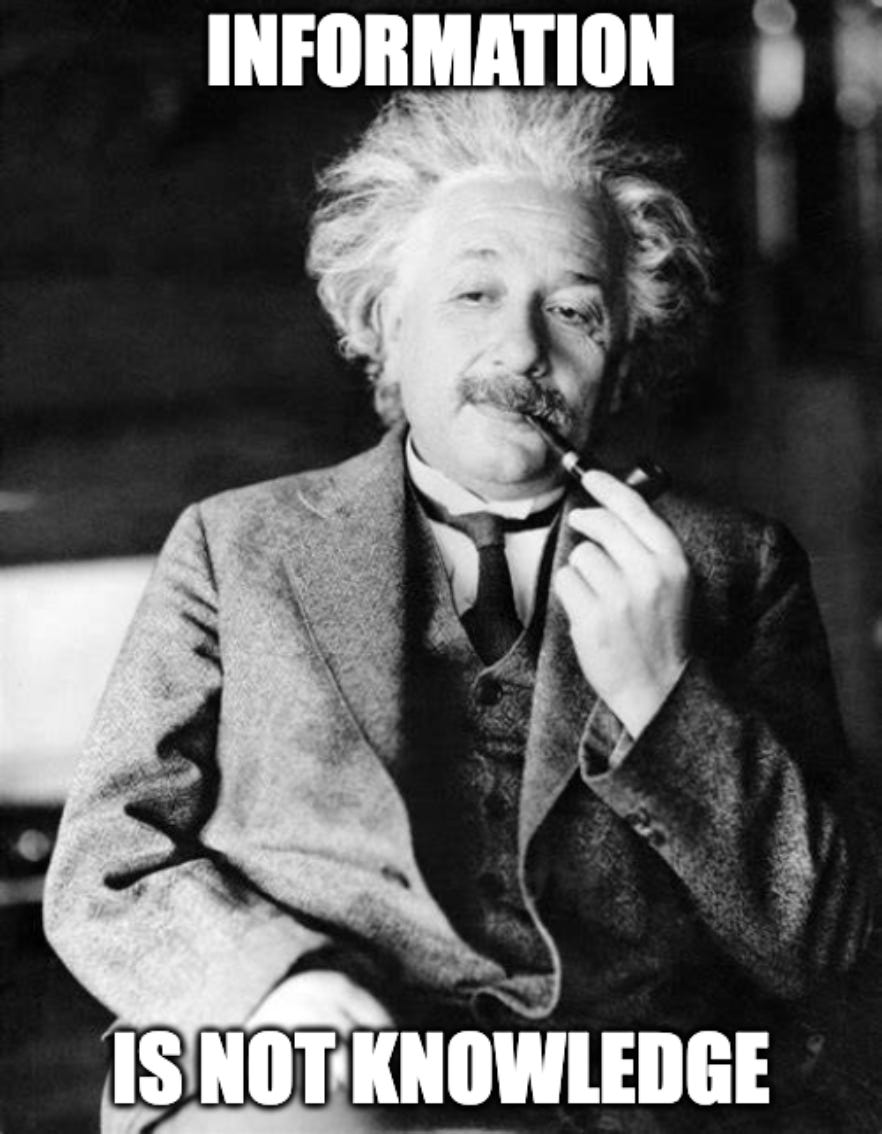
It struck me like lightning.
That's when I realized why intense note-taking alone wasn't making me smarter or more productive—a painful insight, given the mountain of notes I had accumulated.
The phrase also triggered a memory from my law school philosophy classes about epistemology.
I decided to revisit those university lectures about knowledge and research current solutions in this space. That's how I discovered the world of knowledge management systems (aka "second brain").
When My Note-Taking Evolved Into a Second Brain
2023 became a year when I started focusing my note-taking not just on techniques of capturing information but also on a methods and thinking tools which help to transform captured information into actionable knowledge (reading epistemological papers and books about general semantics, exploring knowledge graphs).
Over time, I added more categories of information to my personal notes:
ideas
meeting notes
self-tracking projects
personal CRM
professional data
checklists
templates
travel guides
and much more
As I expanded the types of information, I experimented with various note-taking systems (like Zettelkasten, PARA, and ACE) and different digital notebooks (Apple Notes, OneNote, Notion, Obsidian, and even Roam).
These initial note-taking experiments ultimately led me to the creation of a personal knowledge graph I started building last year.
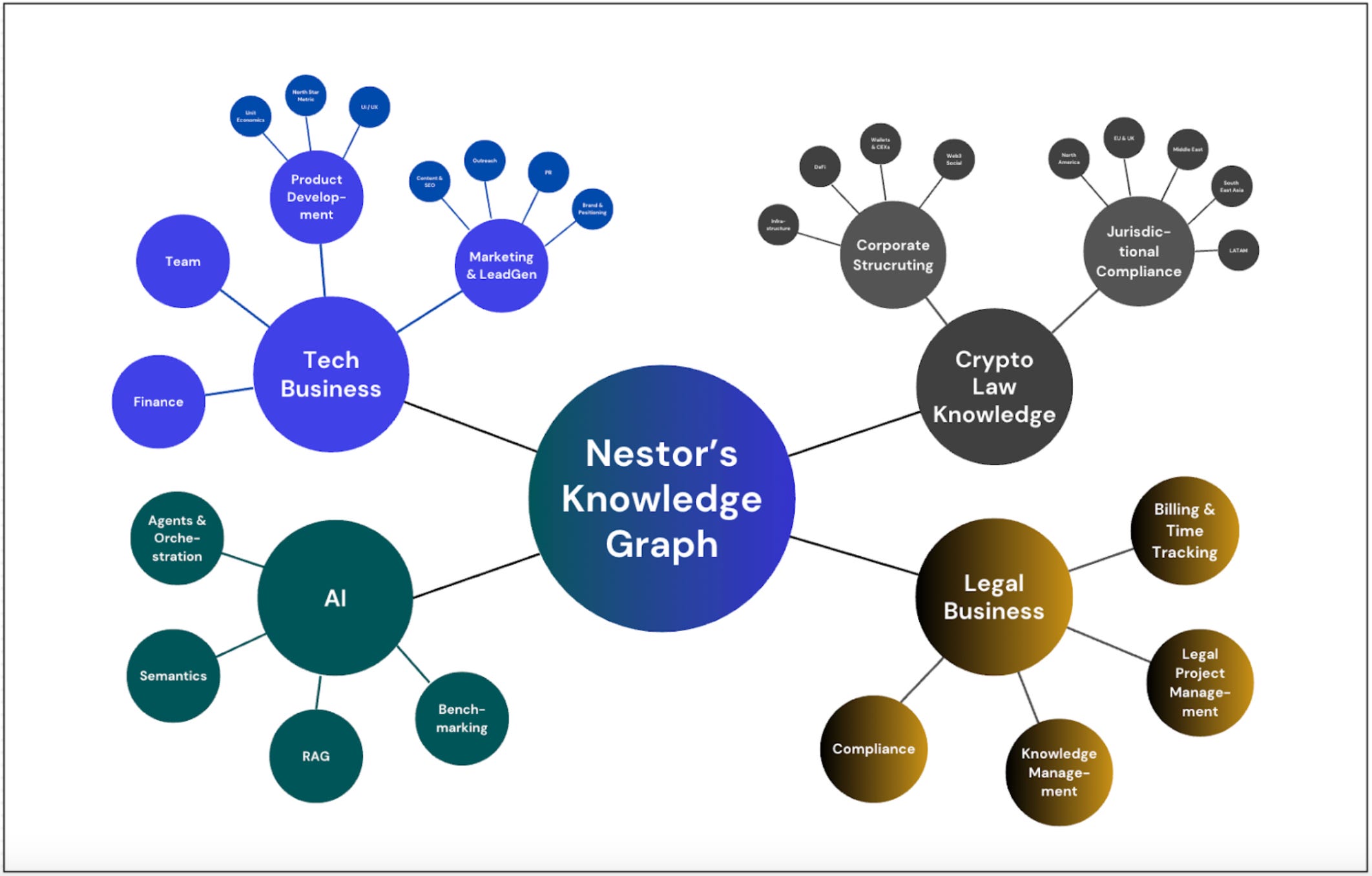
This is what my personal knowledge graph looked like at its inception. In upcoming posts, I’ll share more about its structure, use cases and a bridge between the graph and LLMs.
That shift changed my note-taking for the better. Finally, my decade of collecting wisdom from books, movies, podcasts, and conversations with smart people began working for me, enhancing my decision-making, productivity, and creativity.
Then came another exciting revelation.
The spark of an idea to tackle knowledge work challenge
When I decided to commit to creating a PKM system, AI and LLMs weren't yet in the spotlight. At the time, I simply thought that having a formalized personal knowledge base would help improve my productivity in professional and personal life.
Then AI boomed in early 2023, striking me with the answer to my YC friend's 2020 question about scaling myself.
I realized that AI was the final piece in solving the puzzle of how knowledge workers like myself could scale.
This hypothesis I developed in 2023 was later validated by the market narrative of verticalized AI agents, which gained strong support from major VCs and big tech companies in 2024.
That was when my curiosity sparked a new question: "What if I connect AI to my second brain?" This led to another thought: "How should I structure my personal knowledge to make it readable by both humans and AI?"
AI can’t automate your life if it’s not connected to your second brain
Today there are many discussions about personal AI agents that will handle our daily routines in the nearest future:
you won't need a personal psychotherapist—AI agents will help you self-reflect and identify mental barriers blocking your personal growth;
you won't need a personal gym coach or nutritionist—AI agents will create training programs and meal plans while tracking your performance;
you won't need a personal accountant—AI agents will prepare and submit your annual financial statements.
I support these predictions, but with one condition:
These exciting AI possibilities can only become reality for people who are disciplined enough to formalize their personal knowledge about their mental and physical health, habits, and belief systems—so the AI tools can be connected to a person's "second brain" and use this information for producing outcomes.
Without this foundation, we'll only see unhelpful AI applications that provide overly general, impersonal advice.
So what's next in this story?
If you're still here (and I know this has been quite a long read), thank you for staying with me through this personal reflection!
In this blog post, I want to share my next big professional and personal milestone—as a reminder for my future self.
It focuses on experimenting with AI in a professional and personal life—exploring how we can structure personal knowledge "outside the brain" in human- and machine-readable formats.
The goal is to integrate personal knowledge with AI solutions to make our lives easier and free up time for what matters most.
Throughout this journey, I'll share my learnings and experiments at the intersection of thinking tools, "second brain" systems, and AI.
I'm always happy to get feedback and discuss these ideas further. Let me know if you have any thoughts!
Very interesting! Thanx